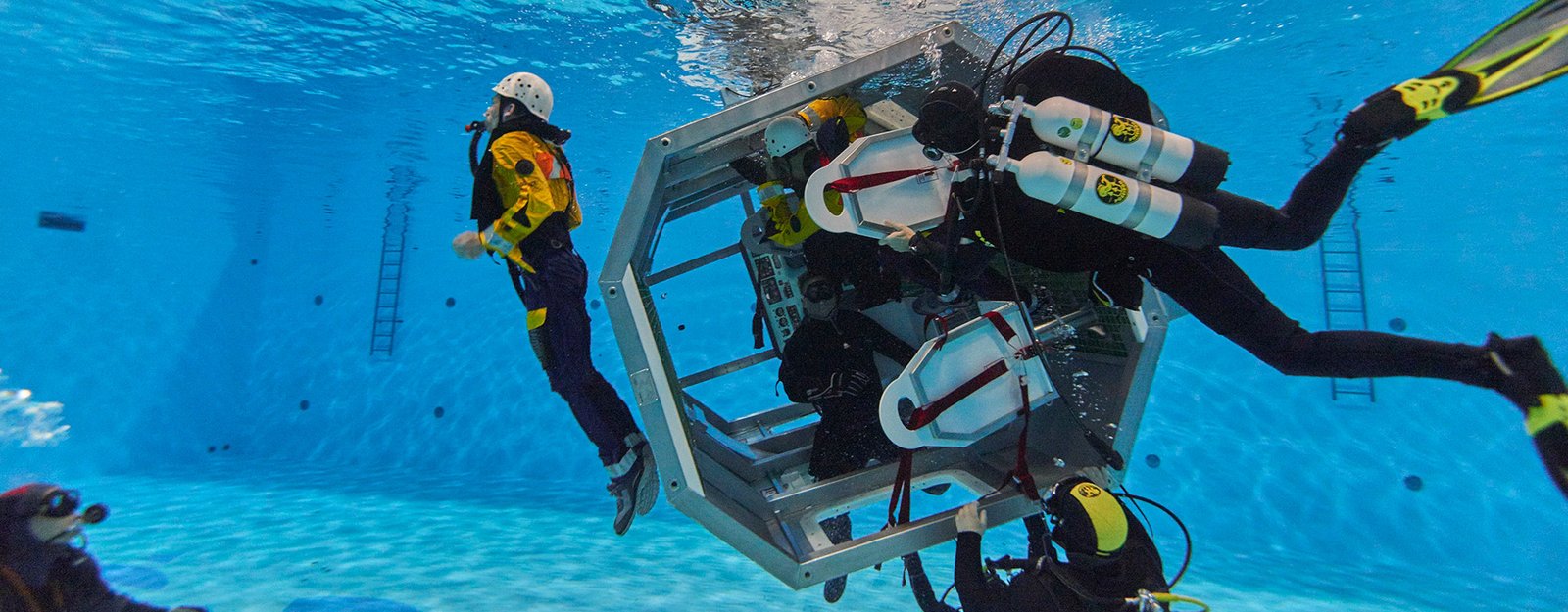
⚡ Why Choose This Training?
- OPITO-approved HUET certification recognized worldwide
- Experienced industry-trained instructors
- State-of-the-art ditching simulator and sea survival equipment
- Hands-on practical training with real-world scenarios
- Compliance with international offshore safety standards
- Corporate group bookings available
Course Overview
Helicopter Underwater Escape Training (HUET) and Sea Survival is critical for personnel traveling to offshore installations by helicopter. Our training includes controlled ditching scenarios in specially designed simulators, teaching emergency breathing systems, underwater escape techniques, post-escape survival, and search and rescue procedures.
Who Should Attend
- Personnel travelling to offshore installations by helicopter
- Offshore workers renewing existing HUET certification
- Aircrew, search & rescue teams, and maritime personnel
- Oil & gas, energy, and maritime sector professionals
What You'll Learn
- Helicopter ditching and escape procedures
- Emergency Breathing Systems (EBS) use
- Underwater escape from a submerged aircraft
- Sea survival techniques and life raft deployment
- Post-escape first aid and hypothermia management
- Search and rescue coordination
Industries This Course Serves:
Verified Certification
Every certificate we issue carries a scannable QR code linking to a public verification record — employers and regulators can confirm authenticity instantly.
SAFETECH ALLIED SERVICES
Certificate of Completion
This certifies that [Participant Name] has successfully completed HUET & Sea Survival Training on [Date]
Need Immediate Safety Training?
We offer expedited programs for urgent certification requirements
Call Now: +234 812 204 6021HUET & Sea Survival FAQs
HUET certification is valid for 4 years. A refresher course is required before expiry to remain certified.
Yes. Participants must be comfortable in water and able to swim. A basic swim test is part of the practical assessment.
The practical session includes a controlled helicopter ditching simulator, underwater escape exercises, emergency breathing system use, and life raft deployment.




 OPITO Certified